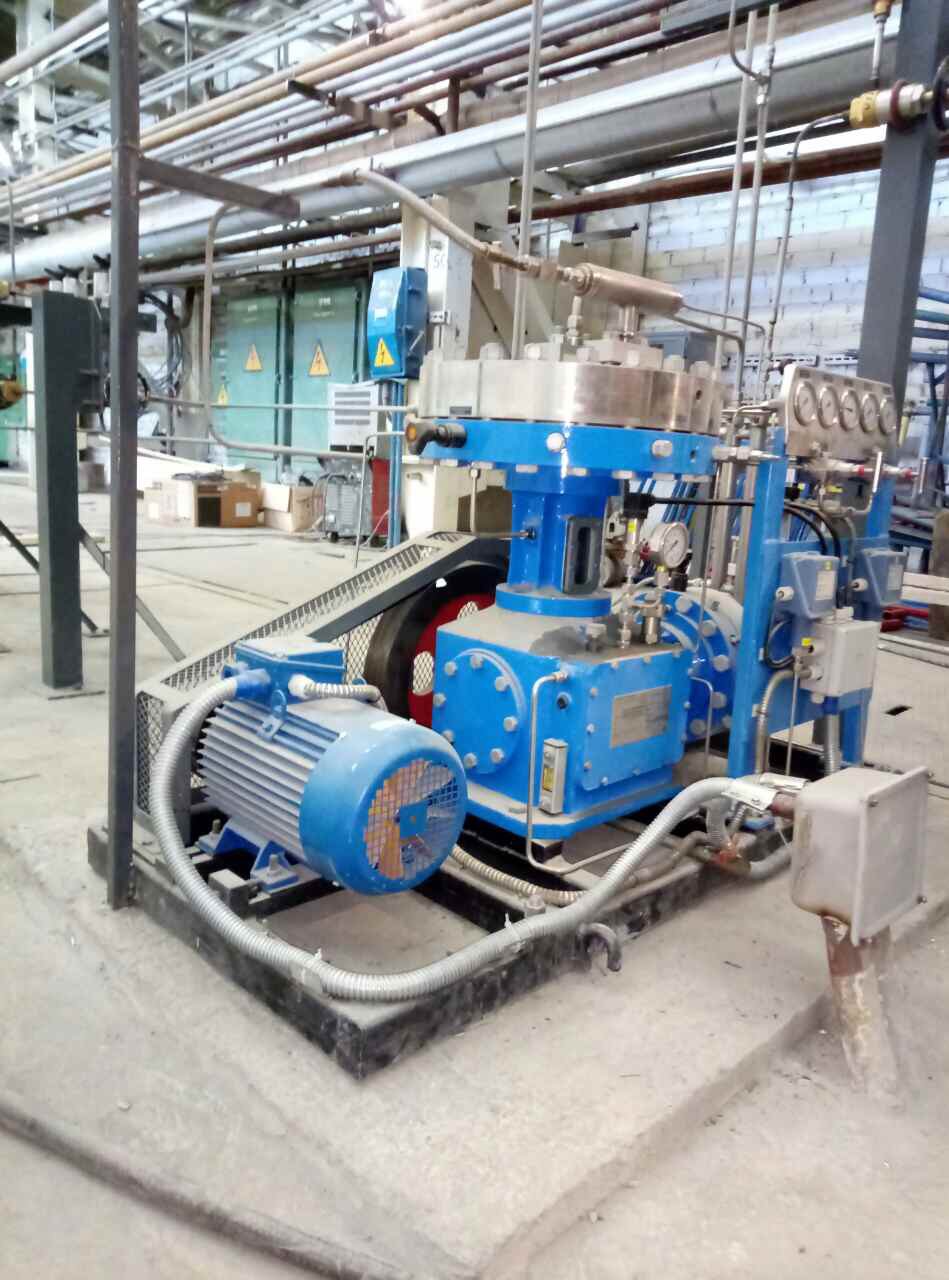
What Can Go Wrong with a New Chinese Compressor?
- Why can a brand-new compressor from China be impossible to commission after delivery?
- What can you discover inside the equipment after a complete disassembly?
- Is it possible to build a reliable compressor from Chinese components that will actually work?
- And where does simply buying equipment end and real engineering work begin?
In this article, we share a real project in Baku, Azerbaijan: compressor disassembly, the problems we discovered, modifications, commissioning, and our experience working with Chinese components.
Spoiler: the problem is not always the Chinese components themselves. What matters much more is who turns those components into a complete compressor, how they do it, and according to what technical requirements.
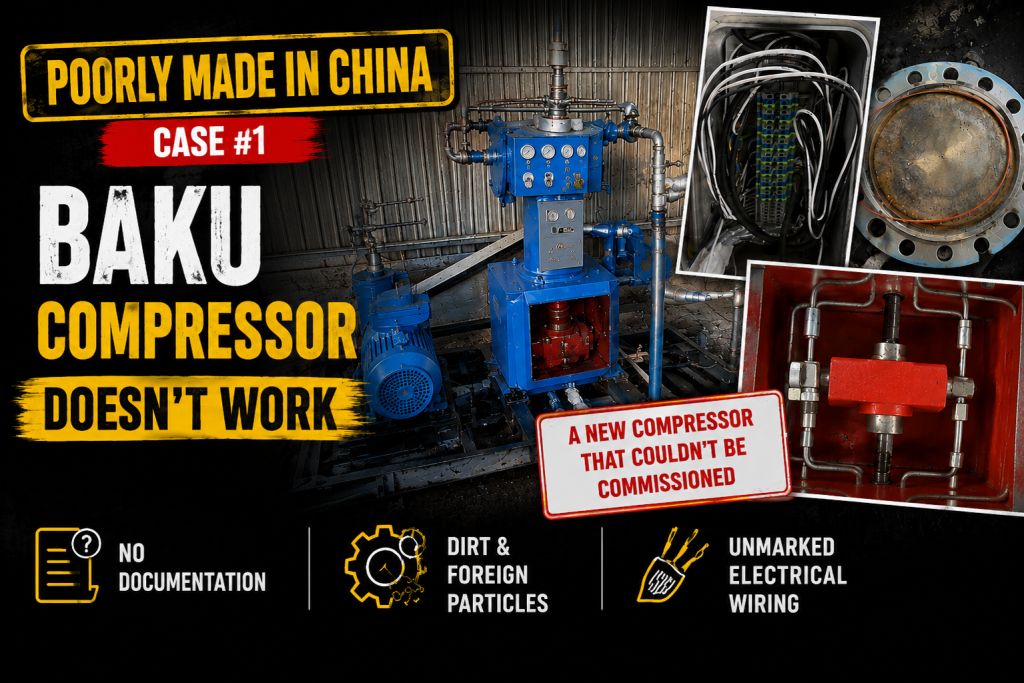
Buying a compressor in China today is easy.
Find a manufacturer, receive a quotation, agree on the technical parameters, make the payment and wait for the container to arrive.
Nothing particularly complicated.
But buying a compressor in China that can be installed, commissioned and reliably operated after delivery is much more difficult.
And the problem is not that Chinese compressors cannot work.
They can.
The problem is that the buyer often has no idea what must happen between placing the order with a Chinese factory and putting the compressor into reliable operation.
Sometimes, there is a very large gap between these two points.
Let me show you a real example.
Project #1. Hydrogen Compressor in Baku
A large oil refinery in Baku needed a diaphragm compressor for hydrogen.
The main parameters were:
- Gas: hydrogen
- Type: oil-free diaphragm compressor
- Suction pressure: 30 bar
- Discharge pressure: 200 bar
- Capacity: 70 Nm³/h
- Cooling: liquid-cooled
We knew this project very well.
In fact, we participated in the tender ourselves and offered the customer our own compressor.
We explained the differences between our solution and the less expensive alternatives. We showed photographs, discussed the design, control system and operating philosophy, and provided examples of compressors we had already built and commissioned.
Our compressor was more expensive.
Approximately 1.5 times the price of the Chinese alternative.
The customer chose China.
I completely understand that decision.
Business is business. If two suppliers appear to offer approximately the same technical specifications while one machine costs significantly less, the desire to save money is perfectly understandable.
There was just one small problem.
The same numbers in two quotations do not necessarily mean that you are buying the same product.
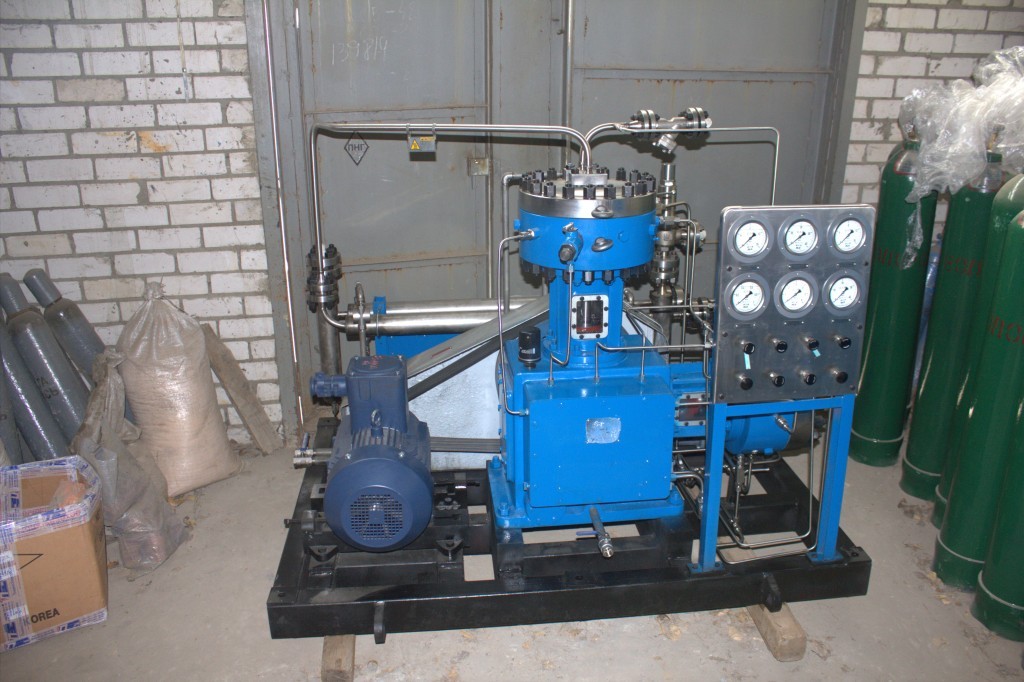
The customer received a brand-new Chinese compressor.
But they were unable to put it into reliable operation.
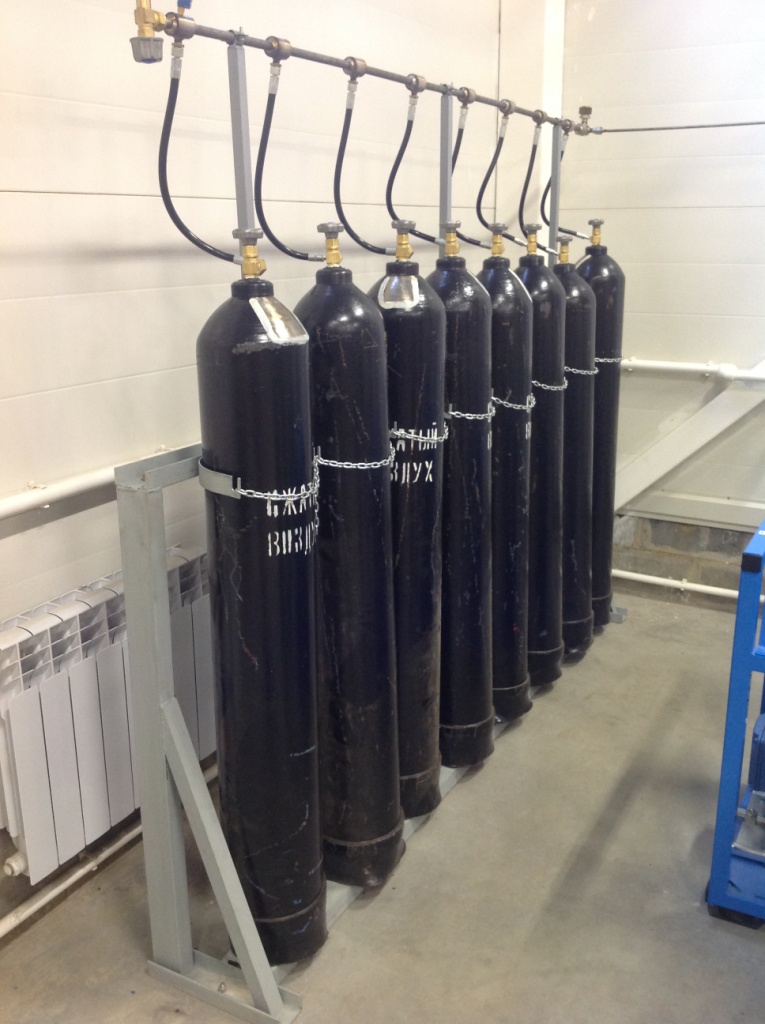
for high pressure storage

What Are You Actually Buying in China?
This is where things become interesting.
When a European or international industrial customer buys a compressor, they normally assume they are buying a finished machine.
In other words:
Delivery → installation → connection → commissioning → operator training → START → operation.
But with some Chinese compressor packages, what arrives may be something quite different.
You may receive a piece of equipment that still requires substantial engineering work before it becomes a reliable industrial machine.
If you do not understand this before signing the contract, the initial savings can disappear very quickly.
That is exactly what happened in Baku.
Problem #1. Very Limited Documentation
Let’s start with something basic.
The compressor arrived. But proper documentation did not.
There was no comprehensive operating manual. No clear description of the operating sequence.
Insufficient information about adjustment and setup.
No documentation that would allow the customer’s engineers to clearly understand how the complete system was supposed to operate.
The electrical side was even more interesting.
We opened a terminal box.
There were wires inside.
But the wires were not properly identified.
Where does this wire go? Where does it come from? What does it control?
It was unclear.
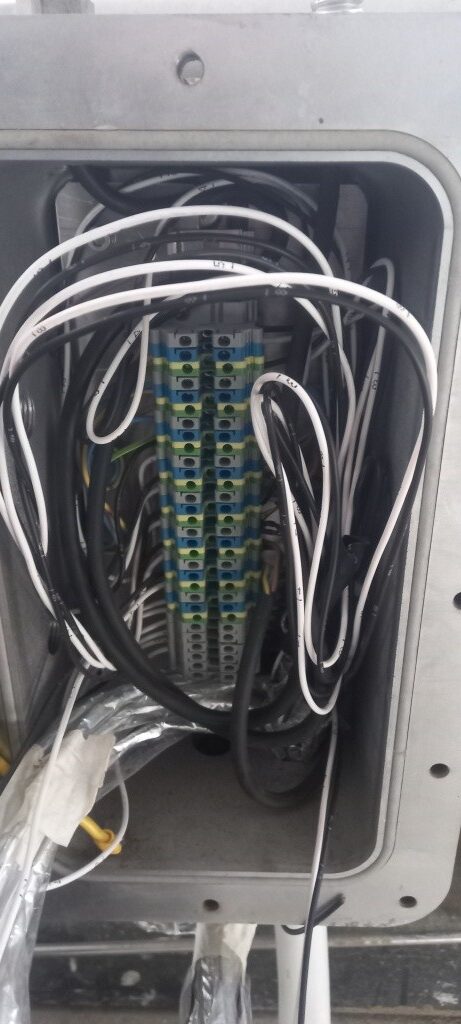
And there was no complete electrical diagram that could be used to reconstruct the logic.
For an engineer who has spent many years working with compressors, this is a problem that can eventually be solved.
But imagine an ordinary plant electrician or maintenance engineer seeing this particular Chinese diaphragm compressor for the first time.
What exactly are they supposed to do?
Guess?
Problem #2. This Is Not a “Press START and Forget About It” Machine
The next issue was the operating philosophy.
Many compressors of this type rely heavily on manual adjustment.
The operator needs to understand:
- how a diaphragm compressor works;
- how the hydraulic oil system operates;
- what oil pressure must be maintained;
- how that pressure should be adjusted;
- what suction pressure is required;
- what happens when operating conditions change;
- the correct startup procedure;
- what parameters must be monitored after startup;
- when the compressor must be stopped.
Correct adjustment of the hydraulic oil system is particularly important for a diaphragm compressor.
Set it incorrectly, and the compressor will not operate correctly.
Under certain conditions, incorrect operation may eventually damage the machine.
This creates an interesting paradox.
You have purchased an industrial compressor.
But to operate it properly, you may need an operator who already has a relatively deep understanding of diaphragm compressor technology.
Our philosophy is different.
When we develop a control system, one of our primary objectives is to minimize the human factor.
An operator should not need to demonstrate expert-level knowledge of the compressor every time the machine is started.
Ideally, the operator’s job should look like this:
START.
That’s it.
The control system should monitor the necessary parameters, prevent operation under unacceptable conditions, stop the machine when a dangerous condition occurs and clearly tell the operator why it stopped.
Industrial equipment should not be designed only for the manufacturer’s commissioning engineer who knows every bolt in the machine.
It must be designed for the real operators who will use it every day.
This becomes even more important when the compressor is installed thousands of kilometers away from the manufacturer.
Problem #3. Assembly Quality
Then we started looking more closely at the mechanical assembly.
Poorly formed and installed tubing.
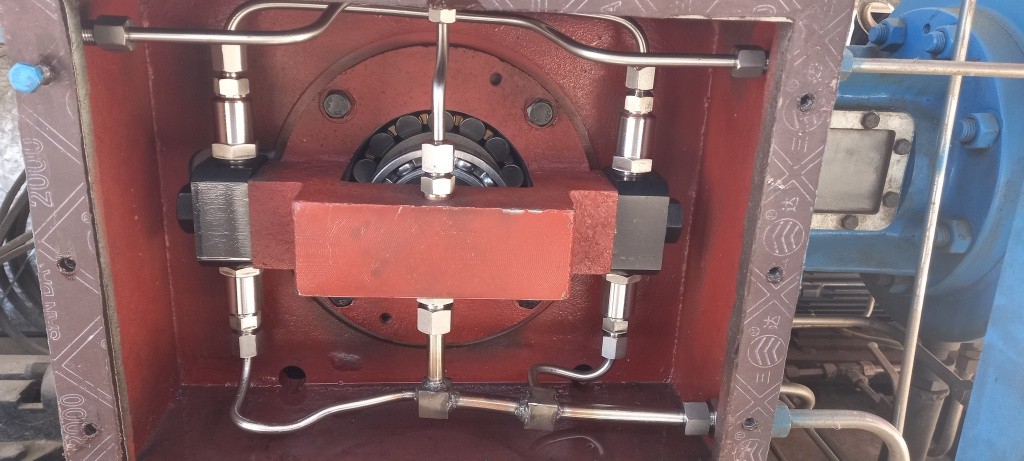
Untidy connections.
Leaks.
Poor fitting of individual components.
Various issues with individual assemblies.
These are things we have encountered more than once.
Sometimes you look at a brand-new compressor and one simple question comes to mind:
Did the person assembling this machine consider that someone would eventually have to operate and maintain it?
But the appearance of the tubing was far from the most serious problem.
Problem #4. Contamination Inside a Brand-New Compressor
This is much more serious.
Over the years, we have disassembled new Chinese compressor equipment and found various types of contamination and foreign objects inside.
Dust.
Metal particles.
Machining debris.
Bolts.
Nuts.
Pieces of cloth.
And even items left behind during assembly.
After many years of working with this equipment, it has become increasingly difficult to surprise us.
But this is not about appearance or aesthetics.
For a diaphragm compressor, cleanliness of the hydraulic oil system is critical.
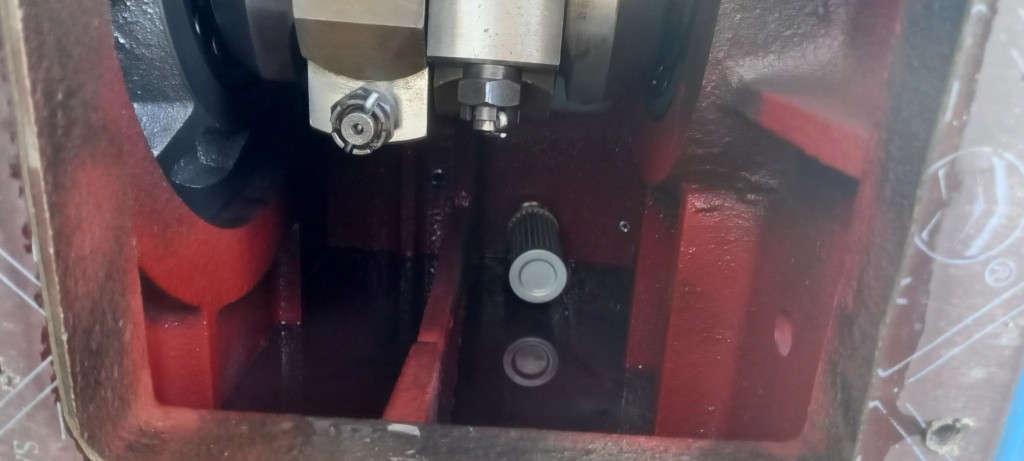
The system contains small passages, valves, hydraulic components and other elements that are sensitive to contamination.
Foreign particles can interfere with valve operation, block passages and prevent the system from developing the correct hydraulic pressure.
In other words, a compressor can be completely new and still contain the cause of its future failure from the moment it leaves the factory.
In this particular case, the condition of the internal systems was one of the reasons the new compressor ultimately had to be extensively rebuilt.
The Brand-New Compressor Had to Be Disassembled
When the customer contacted us, it quickly became clear that a few minor adjustments would not solve the problem.
We could not simply arrive, tighten a couple of bolts, change one setting and leave.
Our approach in situations like this is quite straightforward:
The compressor has to be properly inspected and, when necessary, disassembled.
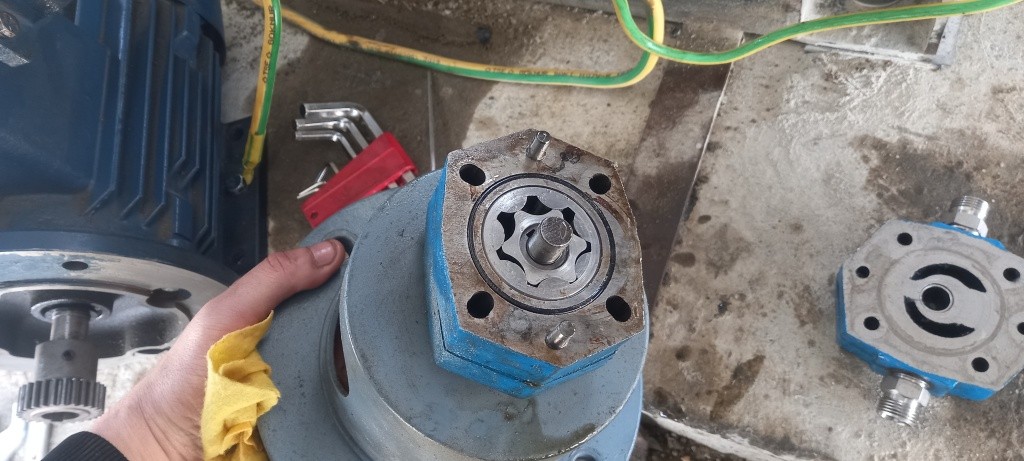
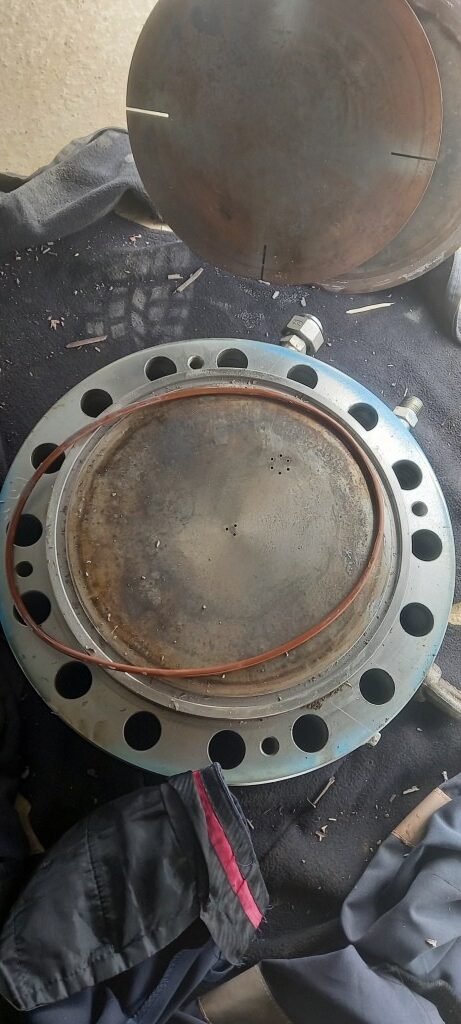
We disassembled the machine.
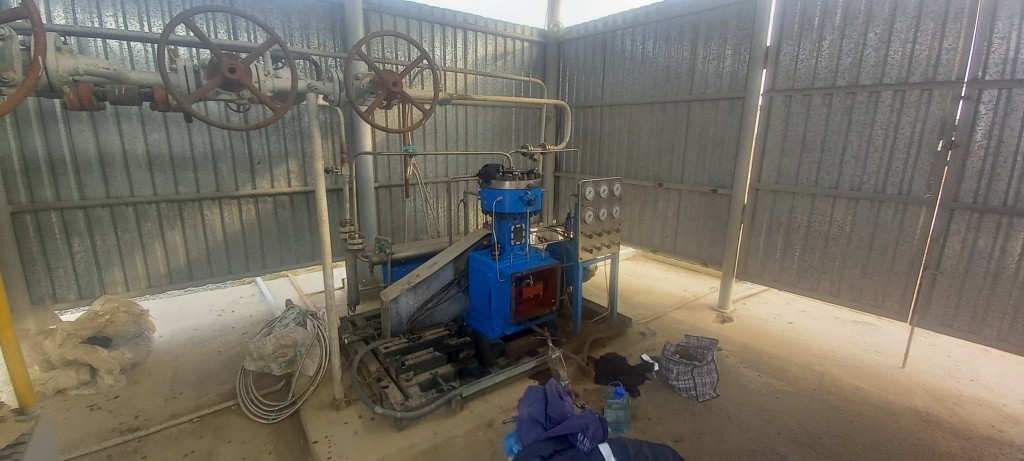
Inspected the internal cavities.
Cleaned the equipment.
Removed contamination.
Checked the hydraulic oil system.
Checked the piping.
Checked the connections.
Checked the valves.
Checked the diaphragm heads.
Checked the electrical system.
And then we started systematically rebuilding the machine.
Problem #5. Hydraulic Oil Pressure Control Valves
During disassembly, we discovered problems with the hydraulic oil pressure control valves.
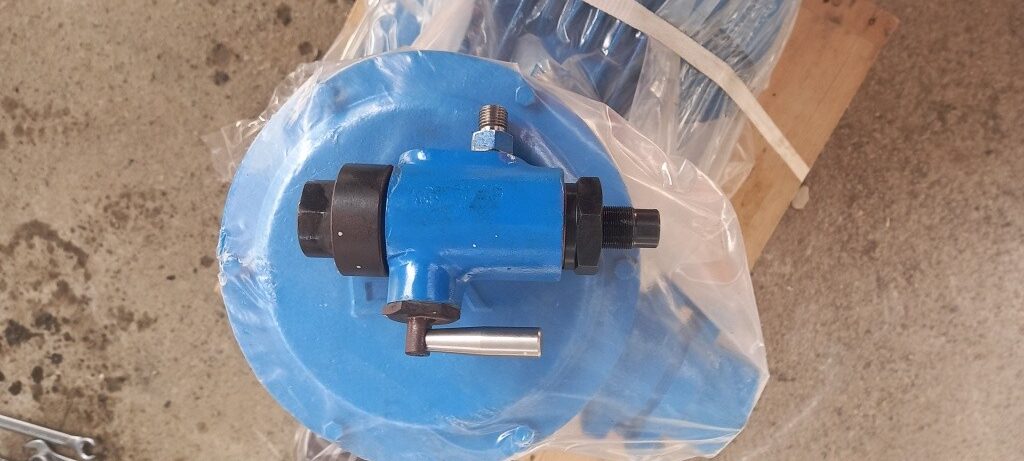
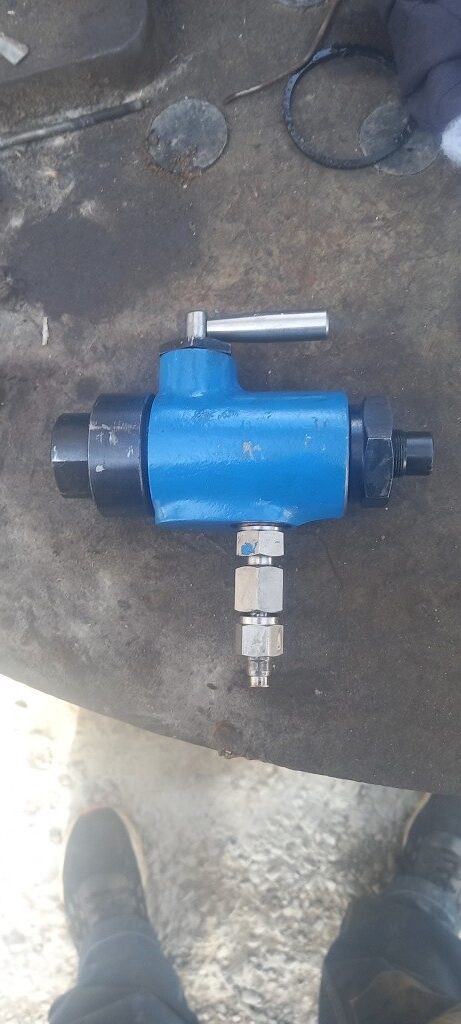
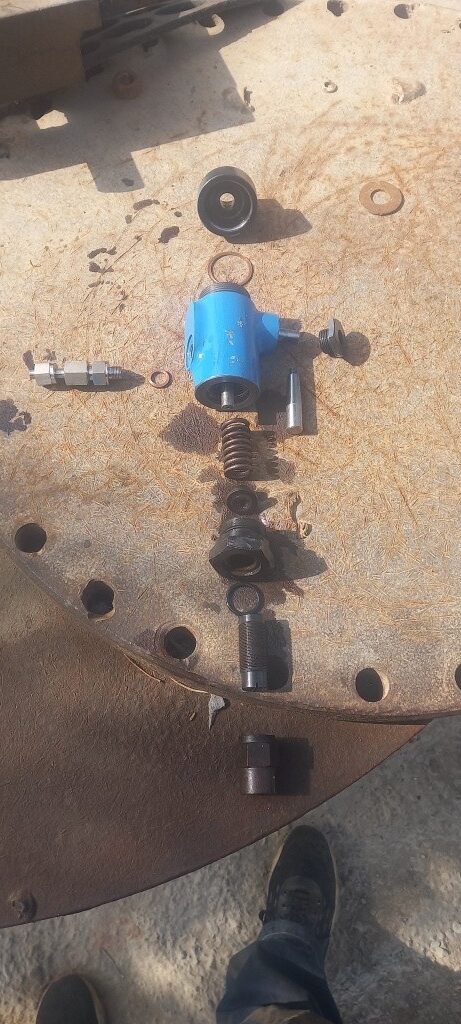
They were damaged and incorrectly assembled.
These are critical components for the proper operation of a diaphragm compressor.
If the hydraulic system does not operate correctly, the diaphragm head cannot operate correctly either.
That is why saying:
“The compressor starts.”
does not tell us very much.
Starting an electric motor is easy.
The real question is:
Can the compressor continuously achieve the required operating parameters for hundreds and thousands of hours?
That is a much more meaningful measure of quality.
Problem #6. The Diaphragms
The diaphragms themselves raised further questions.
When we disassembled the compressor, we had concerns about their condition and quality.
Surface finish.
Machining quality.
Condition of the components.
Material.
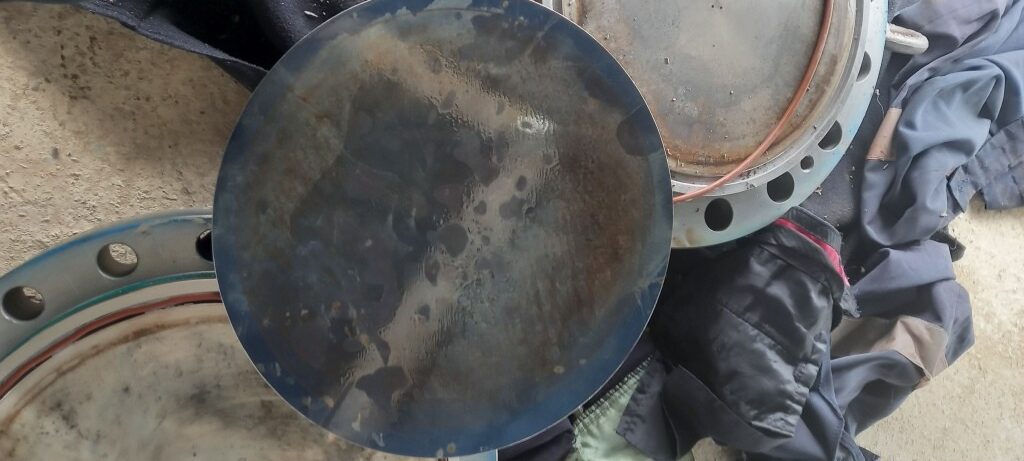
It was difficult to determine exactly what material had been used and what its actual characteristics were.
A diaphragm is not simply a thin piece of metal.
It is one of the key components of the compressor and operates under continuous cyclic loading.
That is why the following are extremely important:
- material selection;
- surface quality;
- manufacturing technology;
- absence of defects;
- correct installation;
- condition of the mating surfaces.
In our experience, we have encountered Chinese diaphragms that failed after only 100–200 operating hours.
Can a high-quality diaphragm be manufactured in China?
Of course.
The issue is not the country.
The issue is what exactly has been installed in your particular compressor and how its quality can be verified.
Problem #7. A Control System You Cannot Fully Access
Then we came to the control system.
And this introduces another issue that buyers rarely consider during the tender stage.
Suppose the Chinese compressor works today.
What happens in three years?
Or five?
What happens if the PLC fails?
What happens if the program is lost?
What if the HMI needs to be replaced?
What happens if a sensor is changed?
What if your engineers need to understand or modify the operating logic?
The customer did not have the original program.
They did not have proper access to the software.
They did not have the necessary installation files.
They had no straightforward way to independently restore the system.
In other words, the physical equipment belonged to the customer.
But the customer did not have full control over the “brain” of the machine.
We therefore decided to replace the control system.
We Essentially Built a New Control System
A new control system was developed.
The electrical system was rebuilt.
Electrical diagrams were prepared.
Our own control hardware was installed.
We developed our own software.
Most importantly, the necessary software and files were handed over to the customer.
Why?
Because the compressor should belong completely to the customer.
Not just the frame, electric motor, diaphragm heads and piping.
The customer must also have the ability to maintain and restore the control system.
If something happens several years later, they should not have to search for the person at a Chinese factory who programmed that particular PLC years ago.
Now We Can Finally Start the Compressor… Right?
Yes.
We started commissioning.
And then something else happened – the electric motor failed.
On a brand-new compressor.
Our conclusion was that the original motor had likely not been correctly selected for the actual operating conditions of the machine.
Fortunately, the customer had another suitable electric motor available.
We replaced it.
And continued commissioning.
This is the point where the real cost of a project can begin to move very far away from the attractive number originally shown in the supplier’s quotation.
Now Let’s Remember Where This Story Started
The customer wanted to save money.
Our compressor was approximately 1.5 times more expensive.
The Chinese offer looked much more attractive.
The compressor was purchased.
It was delivered to Baku.
And then it became necessary to:
- disassemble a brand-new machine;
- clean it;
- identify the causes of the problems;
- inspect and restore the hydraulic oil system;
- repair and adjust valves;
- inspect the diaphragms;
- correct assembly issues;
- rebuild the electrical system;
- develop a new control system;
- write new software;
- prepare documentation;
- replace the electric motor;
- reassemble the compressor;
- adjust it;
- commission it;
- train the customer’s personnel.
And all of this was done to a brand-new compressor.
Not to a machine that had been operating for twenty years. Not to a compressor damaged in an accident. Not to equipment requiring an overhaul after years of service.
To a brand-new compressor that had just arrived from the factory.
Was the Chinese Compressor Really Cheaper?
This is the key question.
When a customer compares quotations, they may see something like:
Compressor A — 150,000 USD.
Compressor B — 100,000 USD.
On paper, the answer looks obvious.
A 50,000 USD saving.
But industrial equipment cannot be compared only by purchase price.
The real calculation looks more like this:
Equipment price + transportation + installation + commissioning + modifications + spare parts + engineering work + plant downtime + training + long-term technical support.
Only after all of these costs are considered can you determine which compressor was actually cheaper.
Sometimes the Chinese machine will still be the more economical solution.
Sometimes the initial saving simply becomes additional expenditure after delivery.
A Chinese Compressor Is Not Necessarily a Bad Compressor
I want to make an important point here.
I am not saying that China cannot manufacture good compressors.
That would simply be untrue.
I have worked with Chinese manufacturers for many years.
I first visited China in 2009.
Since then, I have been there dozens of times.
I have Chinese friends and business partners with whom I have worked for many years.
I genuinely like China and always enjoy visiting.
China is absolutely capable of manufacturing excellent industrial equipment.
But there is a huge difference between saying “China can manufacture this” and knowing that “this particular compressor I am buying will operate reliably.”
That difference is something every buyer needs to understand.
There Is Still One Thing I Do Not Fully Understand
After many years of working with Chinese compressor equipment, there is one question for which I still do not have a satisfactory answer.
How are some of these machines operated within China?
Perhaps part of the answer is the availability of factory engineers.
If the compressor is located in China, a manufacturer’s engineer may be able to visit the plant, make adjustments, replace something, modify the program or show the operator what to do.
Fine.
Now send exactly the same compressor to Nigeria.
Or Azerbaijan.
Or the UAE.
Or Brazil.
Or Canada.
What happens then?
Will an engineer fly from China every time the hydraulic pressure needs adjustment?
When an operator does not understand the startup sequence?
When there is a PLC problem?
When someone needs to troubleshoot an electrical system without proper diagrams?
When the compressor suddenly stops developing pressure?
In my view, equipment intended for the international market should be designed to operate reliably thousands of kilometers away from the factory where it was built.
Can You Build a Good Compressor Using Chinese Components?
Yes.
Absolutely.
In fact, this is exactly how we have worked for many years.
We purchase components, individual assemblies and basic compressor elements in China.
But we do not consider a collection of these components to be a finished industrial compressor.
Because between “buying components in China” and “having a compressor that can be installed at an industrial plant and operated reliably” there is a huge amount of engineering work.
And this, in my opinion, is the critical difference.
A good compressor is not simply a good cylinder, diaphragm head, crankshaft, electric motor, valve or piece of tubing.
A good compressor is a complete engineered system.
We decide which Chinese components can be used and which cannot.
We inspect them.
Disassemble them where necessary.
Check them.
Clean them.
Modify or replace them when required.
Then we assemble the compressor ourselves and build everything around the mechanical core that transforms a collection of individual components into a reliable industrial machine.
This includes:
- preparing the correct technical specification before the project begins;
- selecting the correct compressor design;
- selecting and inspecting components;
- verifying materials;
- inspecting and preparing parts before assembly;
- ensuring cleanliness of internal cavities and the hydraulic oil system;
- correct mechanical assembly and adjustment;
- piping;
- cooling system;
- electrical system;
- instrumentation;
- development of the control system;
- PLC programming;
- protection and interlock logic;
- preparation of electrical diagrams;
- operating documentation;
- testing;
- commissioning;
- operator training;
- ongoing maintenance and technical support.
Only after all of this do you have a finished compressor.
Not a Chinese compressor that we simply purchased and resold.
But a machine that we engineered, assembled, adjusted, tested and take responsibility for.
We operate these compressors ourselves.
We know their weak points.
We know which components perform reliably and which ones are better replaced before the first startup.
We know what needs to be inspected during assembly, how the hydraulic system should be adjusted, how the automation should operate and which protections are necessary to prevent an operator from accidentally damaging the machine.
That is why Chinese components themselves are not a problem for me.
The problem begins when a collection of Chinese components is sold to the customer as a complete industrial solution.
These are two very different things.
What Does It Take to Make a Chinese Compressor Work Reliably?
Essentially, many of the same things.
- Understand exactly what has been supplied.
- Understand the design.
- Inspect the components and materials.
- Check the assembly quality.
- Check the cleanliness of the internal systems.
- Inspect the hydraulic oil system.
- Check the valves and diaphragm heads.
- Inspect the piping.
- Understand the electrical system.
- Understand the control logic.
- Rebuild the automation when necessary.
- Prepare proper electrical diagrams and documentation.
- Assemble the machine correctly.
- Adjust it.
- Test it.
- Commission it.
- And train the personnel who will operate it.
This is what we do not only when manufacturing our own compressors, but also when rebuilding and commissioning Chinese compressors that customers have already purchased.
If a company somewhere in Azerbaijan, Africa, the UAE, Europe, South America or North America has already purchased a Chinese compressor and does not know what to do with it, this does not necessarily mean that the investment has been lost.
In many cases, the machine can be brought to a proper operating condition.
We can travel to the site, inspect the compressor, disassemble it where necessary, identify the problems, rebuild the mechanical system, replace unsuitable components, modify the piping and electrical system, develop a new control system, prepare documentation, commission the machine and train the customer’s personnel.
So the main conclusion from our experience is simple:
You can build a very good compressor using Chinese components.
But a good compressor does not appear simply because somebody installed an electric motor, diaphragm heads and some tubing on the same frame.
It becomes a good compressor through engineering, inspection, correct assembly, automation, testing, documentation and responsibility for the final result.
That huge amount of work — much of it invisible to the buyer — is what separates a collection of Chinese components from an industrial compressor that actually operates reliably from one scheduled maintenance interval to the next.
The Most Dangerous Mistake Is Thinking You Are Buying Only a Compressor
An industrial customer is not really buying a piece of machinery.
The customer is buying a result.
Hydrogen enters at 30 bar.
Hydrogen leaves at 200 bar.
Capacity is 70 Nm³/h.
The compressor operates reliably.
The operator knows how to use it.
The plant has proper documentation.
The maintenance team understands how to service it.
Spare parts are available.
And if something fails, there is a practical way to restore the equipment to operation.
That is the product.
The frame, motor, diaphragm heads and tubing are only parts of that product.
Buying Cheap Does Not Necessarily Mean Achieving the Result Cheaply
This principle does not apply only to China.
It is a fundamental rule when purchasing complex industrial equipment.
But when working with some Chinese manufacturers, the difference between the purchase price and the cost of a working solution can be particularly large.
So before getting excited about an offer that is 30%, 40% or 50% cheaper than the alternatives, ask one simple question:
What exactly is included in this price?
A compressor?
Or a working compressor?
Those are two very different things.
Already Bought a Chinese Compressor and Cannot Get It to Work?
We are receiving more and more requests like this.
- The compressor has arrived.
- It cannot reach the required pressure.
- The hydraulic oil system does not work correctly.
- Diaphragms fail.
- Gas leaks appear.
- The control system behaves unpredictably.
- There are no electrical diagrams.
- There is no PLC program.
- There is no proper operating manual.
- The Chinese manufacturer responds slowly — or no longer responds at all.
- The plant personnel are uncomfortable operating the machine.
- And nobody knows what to do next.
In this situation, the compressor does not necessarily need to be replaced.
Most of these problems can be solved.
We can perform a technical inspection, understand the design and identify the causes of the problems, disassemble and clean the compressor, rebuild the mechanical system, modify the piping, replace problematic components, develop a new control system, prepare documentation, reassemble the machine, commission it and train the customer’s personnel.
If necessary, we can travel to the plant.
Azerbaijan, Africa, the Middle East, Europe, Asia, North America or South America — the location is not the main issue.
If the compressor exists, there is usually a way to determine why it does not work and what needs to be done to make it work.
Final Thoughts
The story in Baku ended well.
But to achieve that result, a brand-new compressor had to be extensively reworked before it could become a reliable industrial machine.
That is why I want to share more projects like this.
Not to say:
“Don’t buy in China.”
That would be far too simplistic.
My point is different.
You can buy in China.
Sometimes it makes excellent economic sense.
But you need to understand exactly what you are buying.
Because:
Buying a compressor in China is easy.
Buying a compressor in China that actually works is much more difficult.
And perhaps even more importantly:
The problem is not that Chinese compressors cannot work. The problem is that the buyer often has no idea what must happen between placing the order and putting the compressor into reliable operation.
That is what Poorly Made in China. Compressors. is going to be about.
Real compressors.
Real photographs.
Real problems.
Real costs.
And real engineering solutions that make the equipment work.
If you need help rebuilding, commissioning, or properly setting up a compressor from China, send us your request:
After our work, it will work. 100%.
Regards,
Konstantin Shirokikh
.